Rhinoplasty (Nose Reshaping)
We reshape the bridge, tip and width of the nose to suit your facial proportions and, if needed, correct the airway in the same operation.

- Duration
- 2–3 hours
- Anaesthesia
- General anaesthesia
- Hospital stay
- 1 night
- Back to daily life
- 7–10 days (once the splint is off)
Rhinoplasty reshapes the bone and cartilage of the nose. The aim is not to make the nose “smaller” but to achieve a nose that is in harmony with the rest of the face and allows comfortable breathing. We also assess the inside of the nose; a deviated septum or enlarged turbinates can be corrected in the same operation.
Open and closed technique
In closed rhinoplasty all incisions are inside the nose. Open rhinoplasty adds an incision of a few millimetres on the skin between the nostrils and is preferred when more shaping of the tip is needed. Which technique is recommended is explained at the consultation, according to the structure of your nose.
Who is it for?
Anyone whose facial bones have finished growing (usually after 16 for women and 18 for men), who is in good general health and has realistic expectations. Revision planning is done separately for patients who have had nose surgery before.
Risks
As with any operation there are risks of bleeding, infection and anaesthesia. Specific to rhinoplasty are prolonged swelling, small asymmetries, temporary nasal blockage and, rarely, the need for a revision. These risks and their likelihood in your case are discussed in detail at the consultation.
Timeline
Consultation and photographs
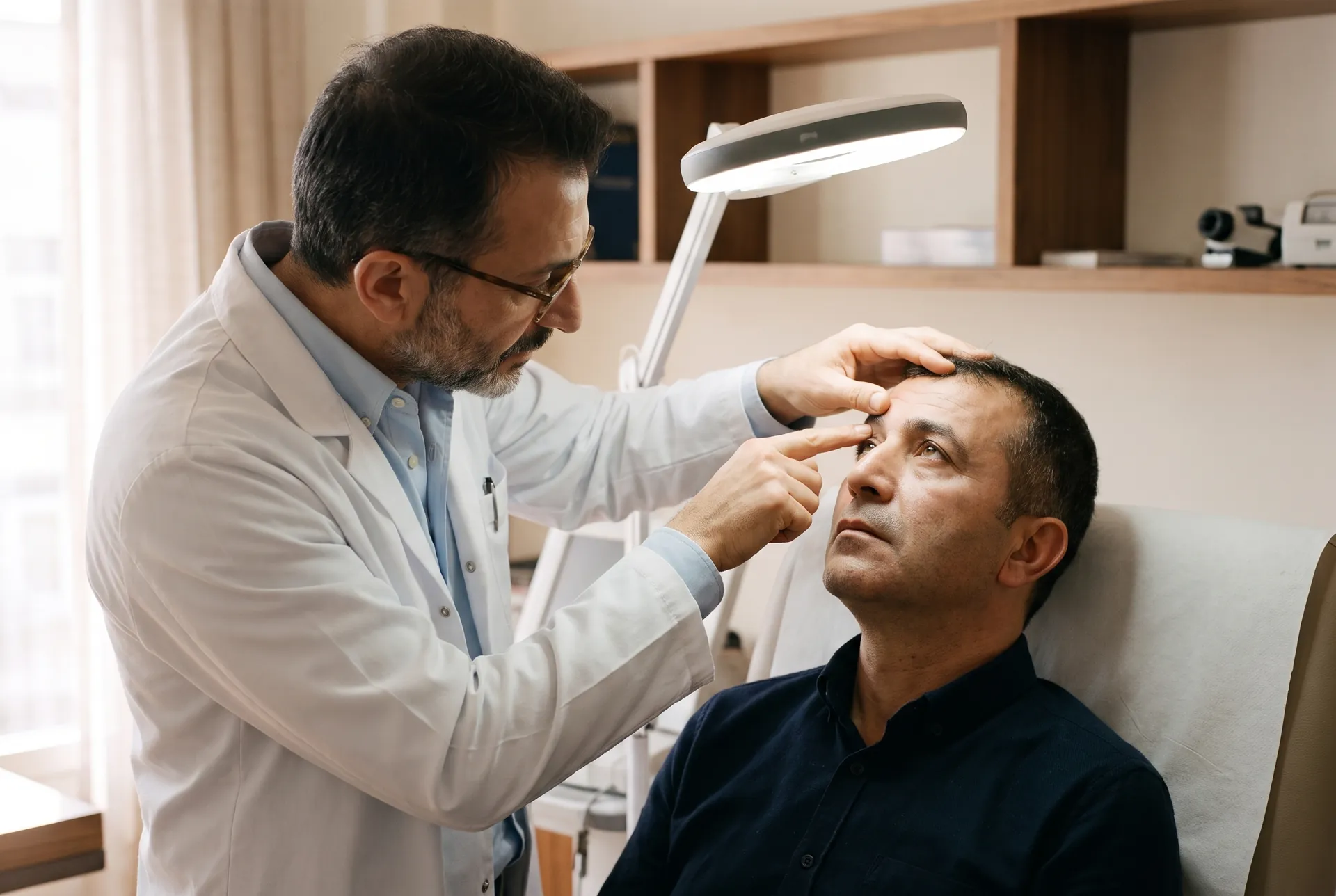
Facial proportions are measured, the inside of the nose and the airway are examined; we discuss your expectations over your photographs.
Before surgery
Blood tests and an anaesthetic assessment; blood thinners and supplements are stopped two weeks before.
Day of surgery
Admission in the morning, a 2–3 hour operation and one night of observation.
First week
A splint stays on the nose; swelling and bruising around the eyes are possible. The splint and tapes come off on day seven.
First month
Back to social life; sport and wearing glasses wait for the doctor’s approval.
First year
Swelling at the tip settles over months; the final shape takes about 12 months.
Questions to ask
Add the questions you tick to your consultation request, or print them and bring them along.
Frequently asked
When can I wear glasses after rhinoplasty?
If the bones were adjusted, glasses should not rest on the nose for the first four to six weeks; I advise you at your check-up. Contact lenses can be used from the first days.
Is packing used in nose surgery?
In most patients I use soft silicone splints that allow breathing instead of traditional packing; they are removed within the first week.
Patient experiences
The result is exactly what I wanted, very natural. At the consultation he said “let’s think about your face, not your nose”; that stayed with me.
I had put it off for years. I asked all my questions on the video call, then went for the consultation.
Comments are published with the patient’s written consent, using initials only. Results vary from person to person.
The information on this page is for general guidance and does not replace an examination. Every surgical and medical procedure carries risks and results vary from person to person. The right approach for you can only be decided at a face-to-face consultation.